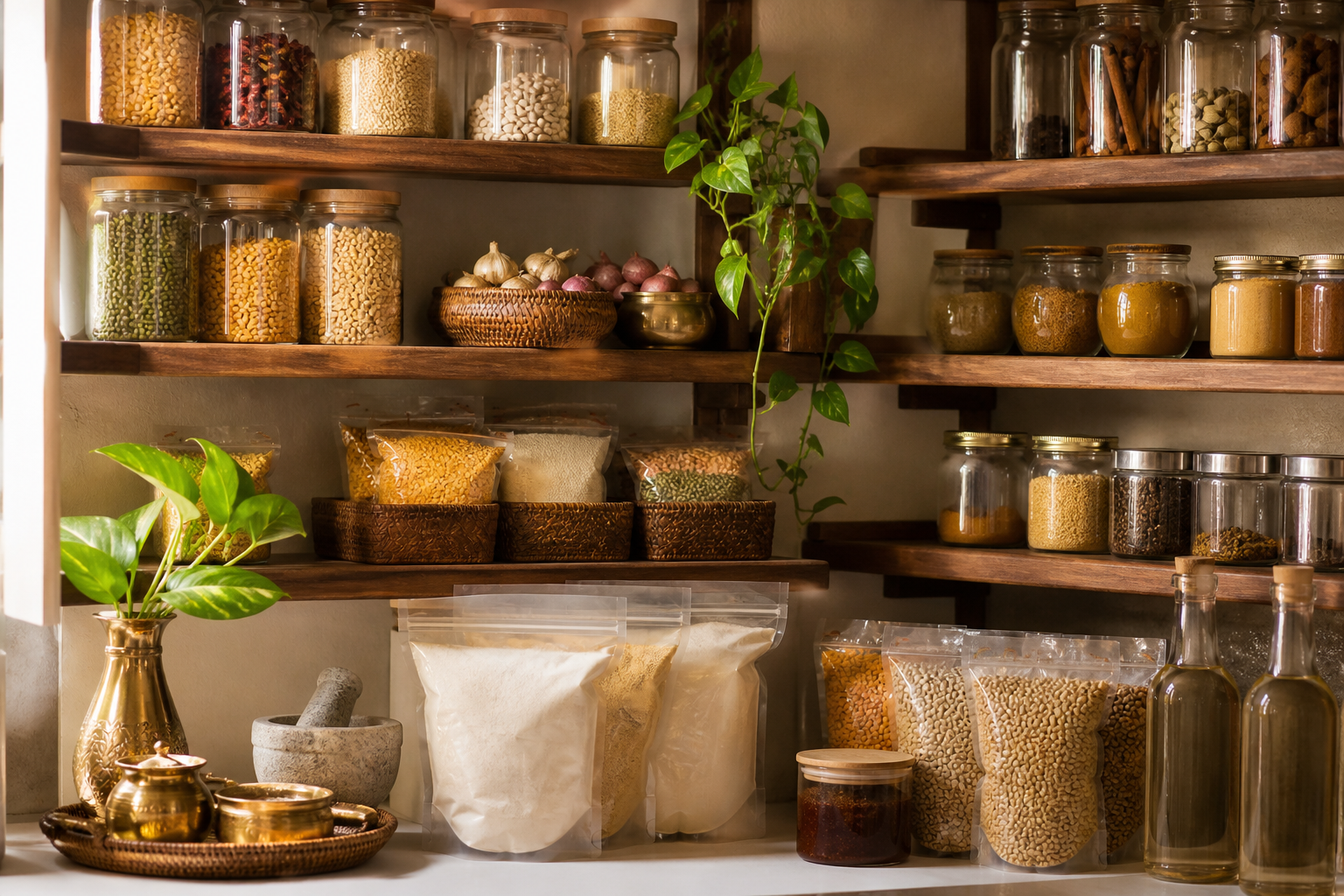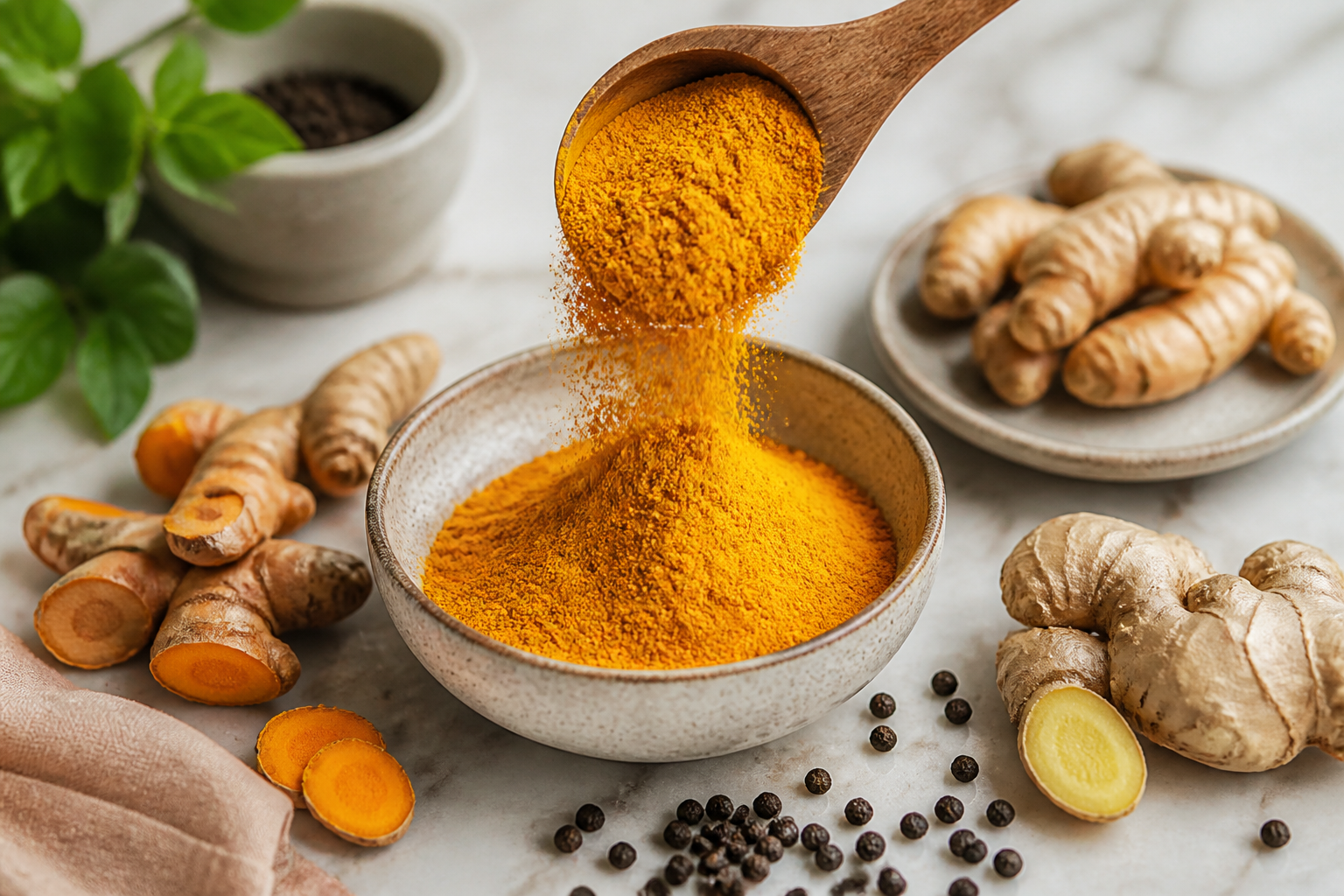


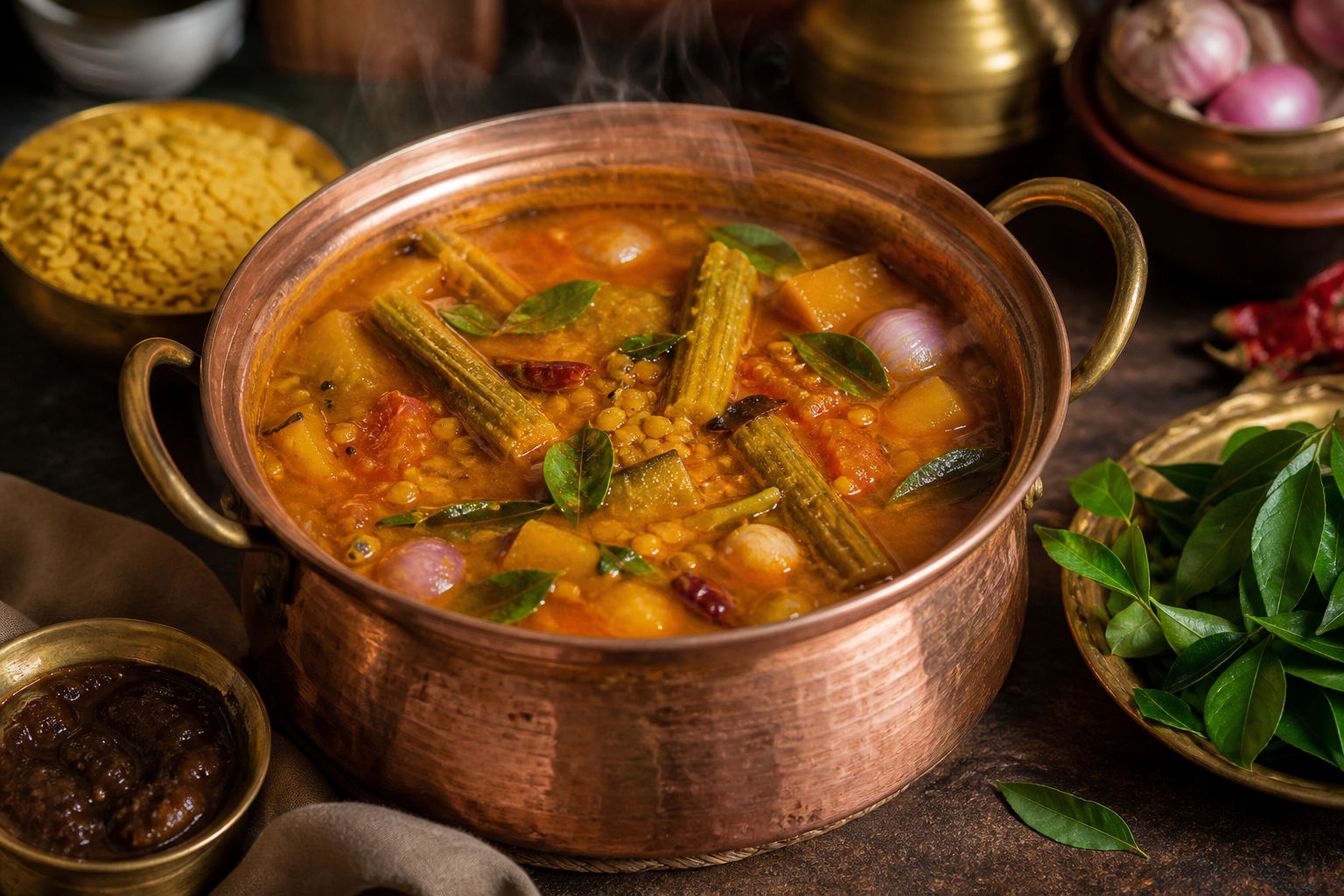
Sambar is the heartbeat of South Indian meals — poured over idli, mixed with rice, or served beside crispy dosa. The difference between a flat, one-note bowl and a layered, aromatic pot almost always comes down to the powder. Whether you roast and grind your own sambar podi or buy a trusted blend from Chozhan Palporul Vaanibam, understanding the spice logic helps you cook with confidence.

What makes sambar powder taste like sambar
A classic powder balances roasted lentils, coriander seeds, dried red chillies, fenugreek, cumin, black pepper, and sometimes curry leaves or asafoetida. Coriander brings citrusy body. Chilli provides heat and colour. Fenugreek adds that slight bitter backbone you recognise instantly. Roasted chana dal or toor dal in the mix creates thickness and nuttiness when the powder hits the tamarind gravy.
Roasting is not optional theatre — it transforms raw seed flavours into something rounder and deeper. Spices should be roasted on a low to medium flame until fragrant, never burnt. Cool completely before grinding so steam does not clump the powder.
Cooking a reliable weekday sambar
Pressure-cook toor dal until soft and mashable. In a separate pot, simmer tamarind extract with salt, turmeric, and vegetables such as drumstick, carrot, pumpkin, brinjal, or shallots. When the vegetables soften, add sambar powder mixed with a little water so it does not form lumps. Combine with the dal, simmer to marry the flavours, then finish with a tempering of mustard seeds, curry leaves, dried red chilli, and hing in hot oil or ghee.
Adjust consistency with water: idli sambar is often thinner and more aromatic; rice sambar can be slightly thicker. A small piece of jaggery, used in some family recipes, rounds sharp tamarind without making the dish sweet.
Store-bought powder without guilt
Homemade powder is wonderful when you have time. A well-made commercial powder is wonderful when you have a Tuesday evening and hungry people at the table. Look for blends with a clear ingredient list and a roast-forward aroma when you open the pack. Keep the packet sealed; humidity is the enemy of ground spices.
Regional styles vary — Tamil sambar, Kerala sambar, and Karnataka versions each lean differently on sweetness, coconut, or vegetable choices. There is no single correct bowl. What matters is balance: tamarind brightness, dal creaminess, spice warmth, and the perfume of tempering.
Next time you shop, pick up toor dal, tamarind, curry leaves, and a sambar powder you trust. Practice the same base method a few times, then customise vegetables and heat level. Soon sambar stops being a special-occasion project and becomes the weeknight dish that makes rice taste like home again — even in a Paris-region kitchen far from the Cauvery delta.